October 25, 2025Wellness or Waterpark: Choosing a Resort Development StrategyWater parks & leasure pools
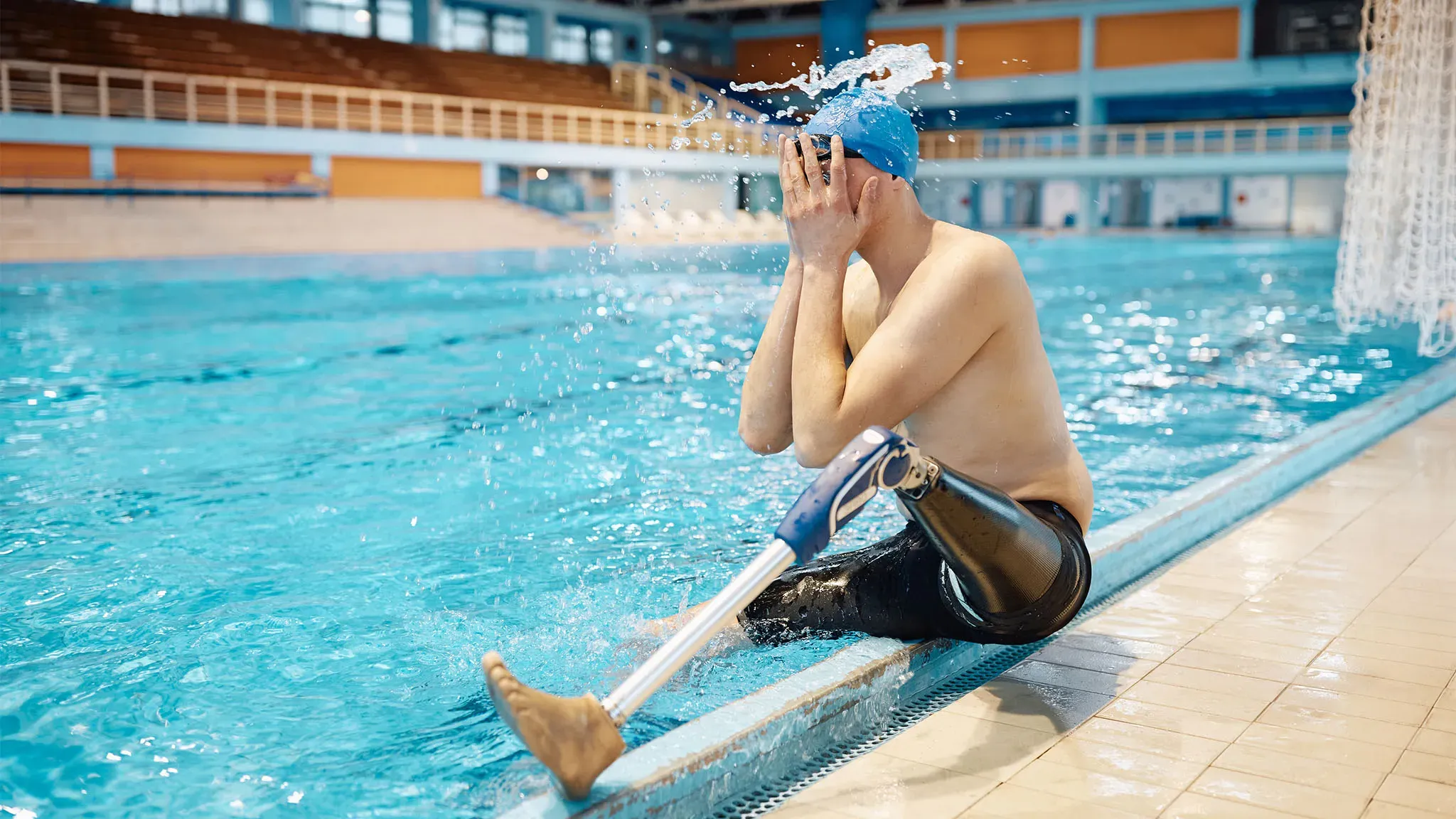
Hydrotherapy is one of the foundational elements of post-traumatic and post-surgical rehabilitation. Water's buoyancy reduces axial load on joints and the spine, allowing motor rehabilitation to begin significantly earlier than on land, while water resistance provides controlled cardio and strength training without the risk of injury from a fall or loss of balance. For patients recovering from amputations, abdominal surgery, traumatic brain injuries, and mine-blast wounds, pool sessions are not an optional extra — they are part of the medical recovery protocol.
The need for rehabilitative water infrastructure in Ukraine today is on a different order of magnitude than before the war. According to the National Health Service of Ukraine, by early 2025 approximately 95,000 amputations had been performed since the start of the full-scale invasion; estimates cited in Western media put the combined total among military personnel and civilians at over 100,000, and at the end of 2024 the total number of wounded servicemembers was estimated at 370,000. For comparison: over 20 years of war in Iraq and Afghanistan, the United States saw roughly 2,500 amputees — meaning Ukraine has faced, in three and a half years, a multiple-times-larger flow of patients requiring long-term physical rehabilitation.
This is a medical need with three structural features that shape how the supporting infrastructure needs to be built:
At the same time, the shortage of specialized pools is an observable fact: most existing rehabilitation centers in Ukraine were built for pre-war-scale civilian medicine and are not sized for the current patient flow.
A therapeutic (hydrotherapy) pool is medical equipment, not a recreational facility, and its design follows a different logic at every level.
Water temperature and quality. Operating water temperature is maintained in the 32–36°C range — significantly higher than in a sports pool (26–28°C). Warm water relaxes muscles, reduces pain, and increases tissue elasticity, but it also creates an environment favorable to microbial growth. As a result, water treatment and disinfection requirements are stricter: the filtration and disinfection system must be sized for a higher microbiological load than a regular pool of the same water volume.
European baseline reference — the German standard DIN 19643 ("Treatment of water of swimming pools and baths," Parts 1–5), which explicitly applies to therapeutic pools as well as conventional ones. It remains the de facto reference across most of continental Europe (also used as a basis in Austria, Switzerland, and the Baltic states), although the UK follows its own industry code of practice — PWTAG (Pool Water Treatment Advisory Group) — which sets out separate requirements specifically for hydrotherapy pools.
Key differences for a therapeutic pool under DIN 19643:
| Parameter | Standard pool | Therapeutic pool |
| Free chlorine | 0.2–0.5 mg/l | 0.2–0.5 mg/l, but 0.7–1.0 mg/l for hot hydromassage/therapeutic baths |
| Load capacity factor (for calculating recirculation flow rate) | standard | tightened — due to higher temperature, longer patient contact time with the water, and greater organic load (longer immersion, open wounds, orthoses) |
| Disinfection barrier scheme | coagulation → filtration → disinfection | the same two-barrier scheme, but with mandatory verification of microorganism inactivation efficacy (indicator test on Pseudomonas aeruginosa — 99.99% inactivation within 30 seconds) |
| Recirculation rate | based on standard load | higher — compensates for the elevated warm temperature, which favors microbial growth, and the greater contaminant load per bather |
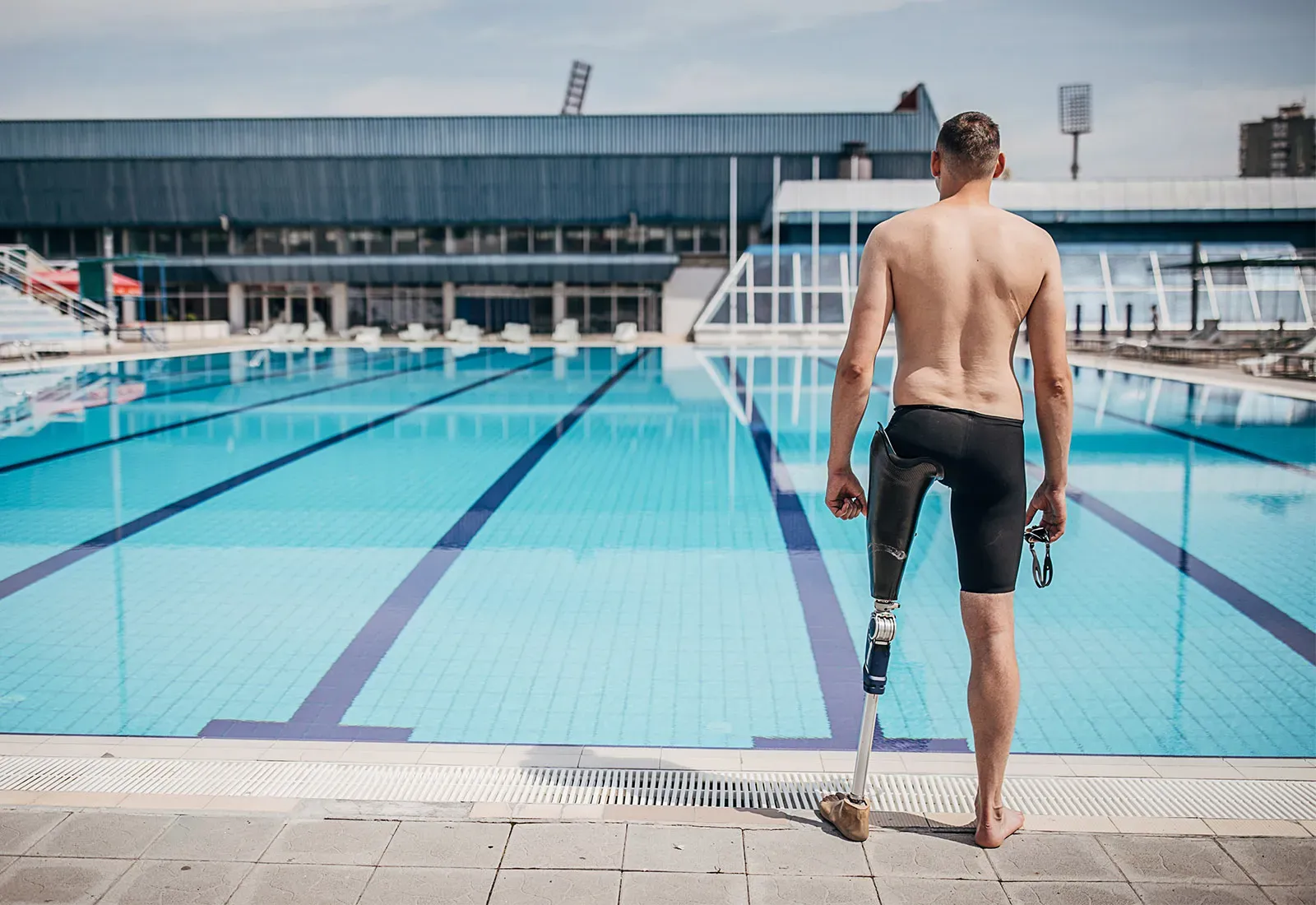
Depth and floor profile. Standard therapy pool depth is 0.9–1.5 m, with a gentle slope or an adjustable (movable) floor that allows depth to be tailored to the specific procedure and the patient's mobility level — from vertical joint offloading to full immersion for wheelchair-mobile patients. Stairs are not recommended as the primary means of entry; ramps and lifts are used instead.
Lifting and support systems. A mandatory element is fixed or mobile patient hoists for those who cannot enter the water unassisted, including patients in wheelchairs or on stretchers. This requires space for a full wheelchair or gurney turn at poolside, handrails set at heights suited to different statures and support types, slip-resistant surfacing on the surrounding deck, and a deck zone of at least 2 m² on at least two sides of the pool specifically for turning gurneys and wheelchairs.
Zoning and patient flow. Changing rooms and showers should open directly onto the pool deck without crossing general traffic flows; a separate storage area is needed for mobility aids (wheelchairs, crutches, orthoses) away from pool chemical storage; and the staff station should have a direct line of sight over the entire pool. For patients with amputations and prosthetics, a separate area is provided for putting on and taking off a prosthesis before and after the session — apart from the general changing room.
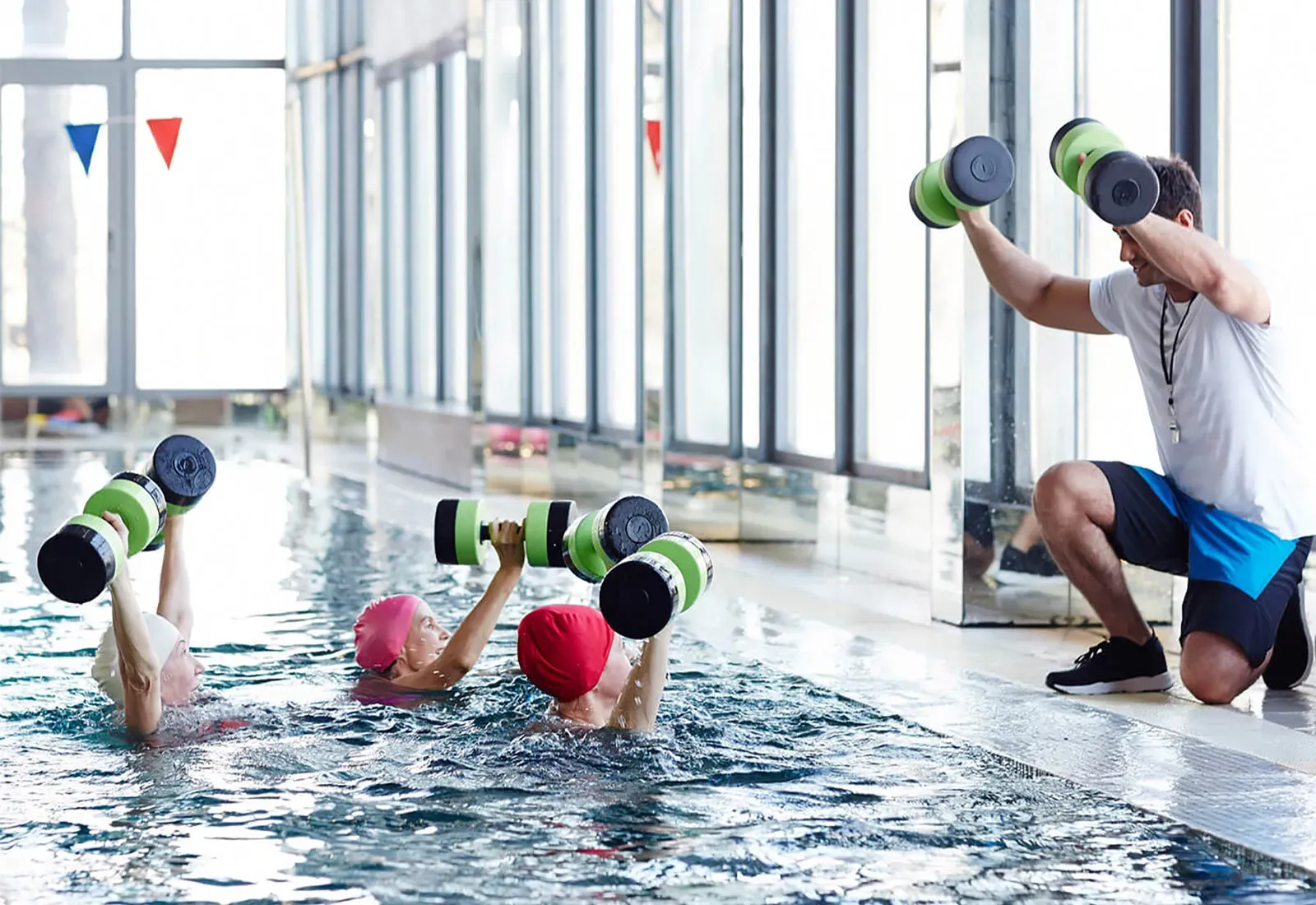
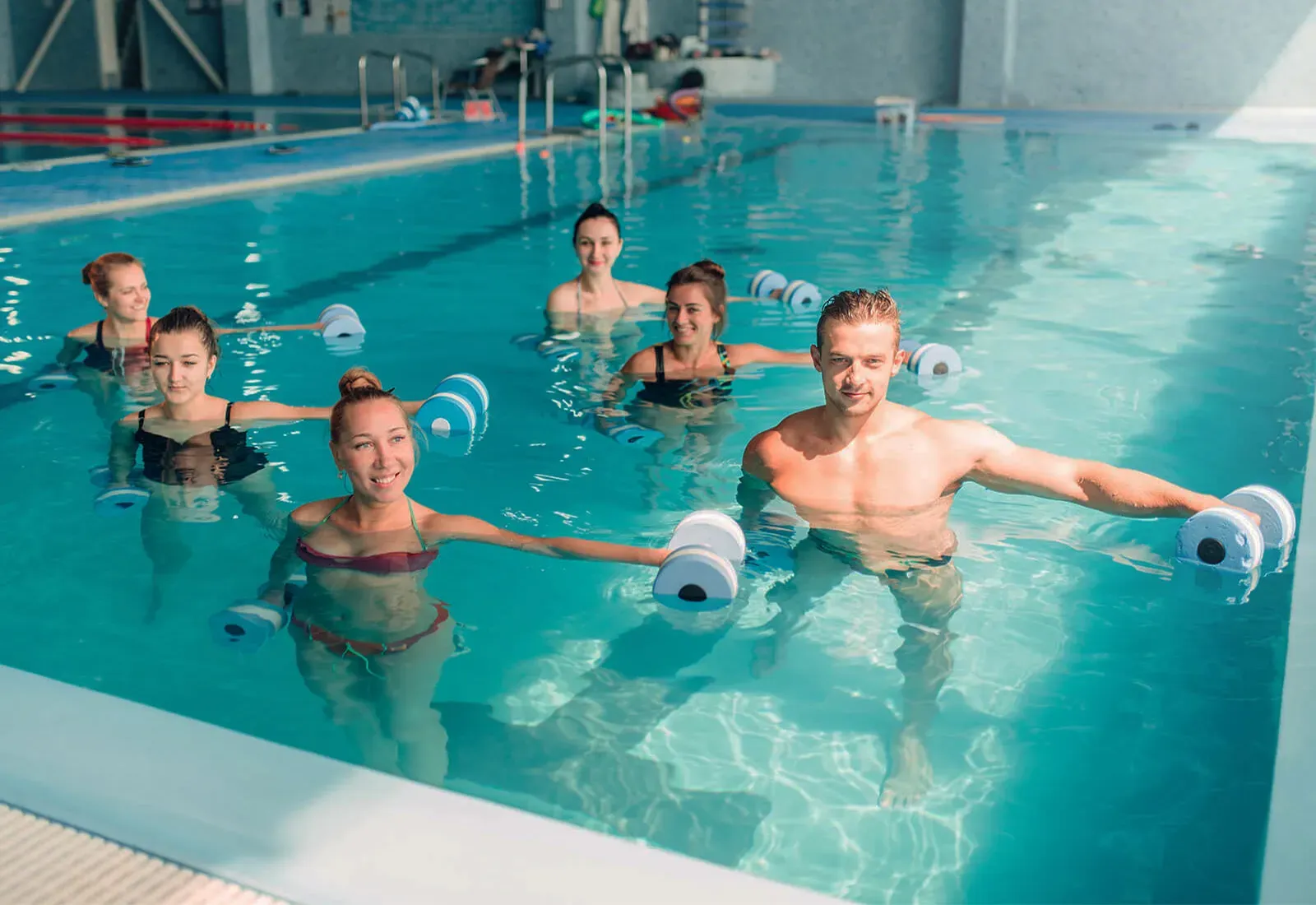
Air temperature in the hall should be 1–2°C above water temperature, and humidity and ventilation must be designed for the constant presence of a warm, open water surface without risking condensation or chloramine buildup — placing higher demands on dehumidification and air exchange systems than in a regular pool.
The main reference is the German VDI 2089 (Blatt 1 — indoor pools, Blatt 3 — outdoor pools), which is also widely used as an industry standard outside Germany.
Key requirements:
Medical operating protocol. A therapy pool is operated under a medical protocol: sessions are supervised by a physical therapist or physiotherapy instructor, an individualized program is developed for each patient, and some patients — those with recent surgeries, cardiovascular conditions, or respiratory illness — are only cleared for sessions after a medical examination. This means the project must include not just the pool tank and its engineering, but also a medical examination office, an assessment area, and workstations for therapy staff located directly adjacent to the pool. Rehabilitative water infrastructure serves a function that extends beyond treating an individual patient.
Visibility and recognition. According to a December survey by the Rating Group polling agency, more than three-quarters of Ukrainian veterans fear a lack of understanding from society, and a comparable share are concerned about a shortage of inclusive spaces. High-quality, accessible rehabilitation infrastructure is a direct answer to that concern: it makes the recovery process a visible, normalized part of public life rather than an isolated medical procedure.
Return to active life. According to Ukraine's Ministry of Veterans Affairs, roughly 60% of veterans return to their previous workplace after demobilization. Quality physical rehabilitation, including aquatic therapy, is one of the direct factors driving this figure: the ability to return to professional and social activity depends directly on how complete and accessible recovery treatment is.
Partnership and international attention. Major rehabilitation infrastructure projects in Ukraine are consistently attracting the attention and partnership of foreign clinics, charitable organizations, and medical equipment manufacturers — from foundations specializing in prosthetics to university and research programs in the field. This builds not just a medical but a professional ecosystem around the facility — knowledge exchange, staff training, and access to current aquatic rehabilitation protocols.
Role in reintegration. Beyond military personnel, a growing stream of patients includes civilians affected by the war, as well as people requiring cardiac, oncological, and neurological rehabilitation on general grounds. A facility that brings different patient categories together in a single, well-designed environment works toward normalizing the broader public perception of disability and rehabilitation.
Demand for therapeutic water infrastructure in Ukraine today is a structural, nationwide medical need — not a local or temporary request. A therapy pool is a distinct engineering-and-medical typology: water temperature of 32–36°C, adjustable depth of 0.9–1.5 m, mandatory lifting systems, enhanced water treatment and climate control, and zoning built around a medical protocol — all of this needs to be established at the concept stage, not adapted after the fact. The project needs to account for medical infrastructure around the pool itself, not just the tank — an examination office, a zone for prosthetics and mobility aids, and workstations for physiotherapy staff. This kind of infrastructure serves a meaningful social function: it makes rehabilitation a visible, normalized part of public life, supports people's return to professional activity, and creates a platform for international professional exchange.