Design Project
We design interiors as a managed system, where scenarios, flows, and engineering shape the guest experience, control CAPEX and OPEX, and ensure a sustainable asset economics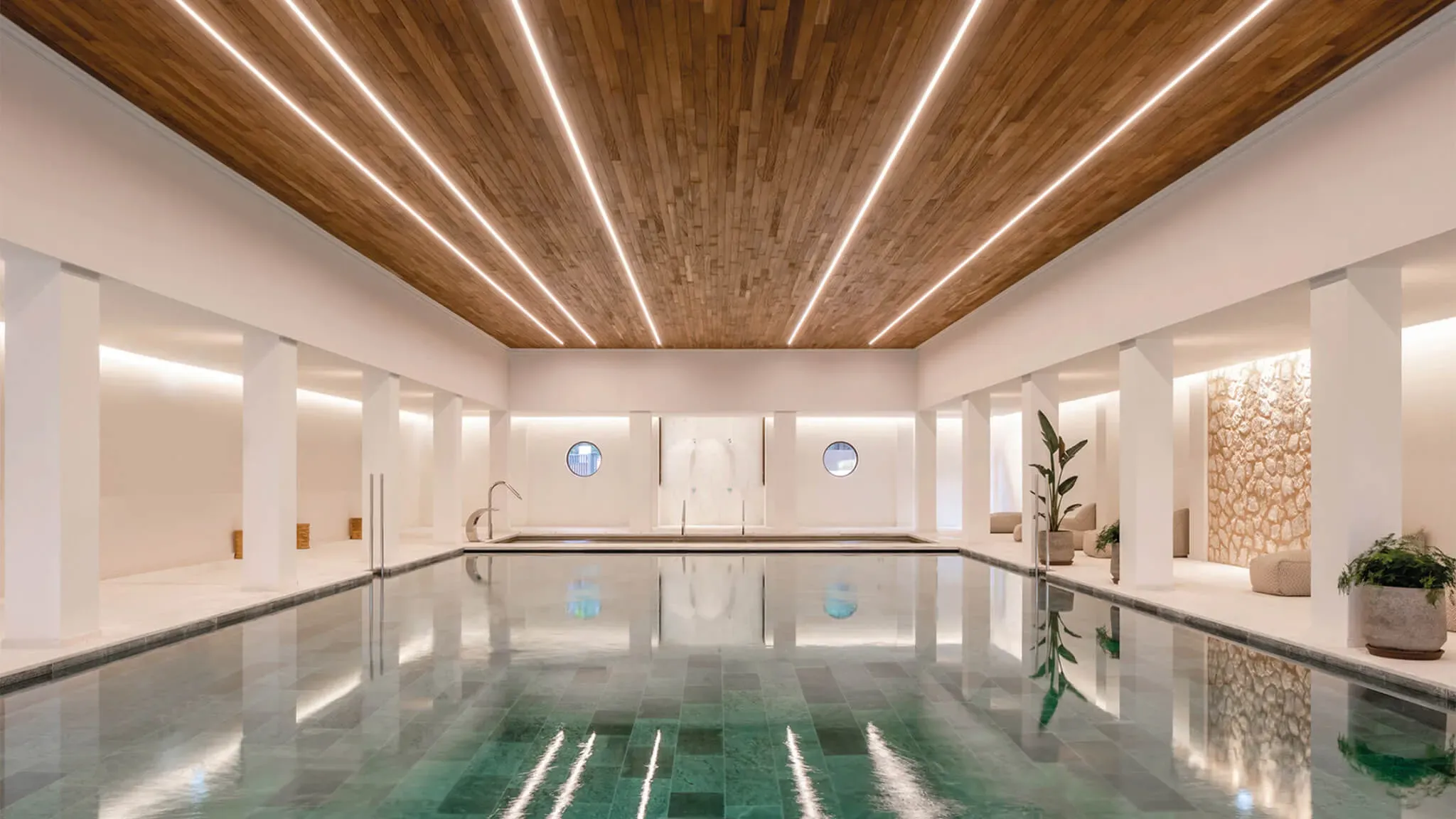
Interior as a managed asset
Design Project for Wellness and Water & Entertainment Facilities
The core principles of interior design for wellness and water & entertainment facilities establish the foundation for balancing guest experience, investment efficiency, and operational performance. It is at this level that decisions are made which directly impact CAPEX and OPEX, reducing the risk of budget overruns and simplifying long-term operations.
Well-designed layouts and usage scenarios increase dwell time, enhance guest engagement, and stimulate the consumption of additional services. As a result, RevPAG grows, and the interior becomes not merely an aesthetic environment but a managed tool for achieving key KPIs and a sustainable financial model for the facility.
Scenarios and flows come before form
We design interiors starting from circulation logic, sequences of spatial states, and usage scenarios. Guests should intuitively understand routes, rhythm, and the purpose of each zone without navigational “noise.” Architectural form and decorative elements are subordinated to flows, dwell time, and perception psychology — not the other way around.
Wet zones are, first and foremost, an engineering system
Spa and water interiors are not about decoration, but about a properly engineered environment. We treat each wet zone as part of an integrated engineering system, considering moisture loads, temperature regimes, ventilation, drainage, and the chemical resistance of materials. Aesthetics are acceptable only when they are technically justified and operationally reliable.
Light, sound, and tactile perception are the key interior materials
In wellness spaces, atmosphere is shaped not by finishes, but by light, acoustics, and bodily perception. We design layered lighting scenarios, control acoustics, and work with surfaces intended for barefoot contact. These parameters directly influence comfort, relaxation, and guest dwell time.
Uniqueness comes from place, not from trends
We avoid generic solutions and visual imitation. Each interior is shaped by local context, the project narrative, cultural references, and the natural characteristics of the region. This approach creates identity, strengthens recognizability, and builds long-term brand value.
Interior design is part of the asset’s business model
We evaluate every interior decision through an economic lens: its impact on throughput capacity, average spend, upselling potential, operational costs, and the asset’s lifecycle. Layout, atmosphere, and functional zoning must support monetization without compromising the sense of calm and quality.
Operations and maintenance are considered from day one
We design interiors to be intuitive and efficient for staff: clear service routes, access to engineering systems, and ease of cleaning and component replacement. This reduces OPEX, extends the lifespan of finishes, and preserves spatial quality over many years.
Solutions are validated before implementation
Key zones and details are tested through mock-ups, material testing, and operational scenarios. This approach helps identify risks early, avoid construction-stage errors, and maintain balance between concept, budget, and real-world operations.
Design project timeline
Start at works
3 weeks
6 weeks
9 weeks
12 weeks
Guest experience and usage scenario development1 – 3 weeks
step 1At this stage, the logic of guest interaction with the facility is defined — from the first point of contact and entry to the completion of the visit and motivation to return. Key usage scenarios, the sequence of experiences, privacy levels, and the rhythm of stay are established. The outcome is a structured guest journey that enhances comfort, increases dwell time, and directly impacts guest engagement and the economic efficiency of the facility.
Interior zoning development2 – 3 weeks
step 2At this stage, the internal spatial structure of the facility is developed with a clear separation of functional, wet, and dry zones, as well as guest and staff circulation flows. Interior zoning aligns usage scenarios, privacy levels, and operational requirements, ensuring comfort, safety, and efficient facility operations. The result is a logical and scalable spatial layout that directly impacts throughput capacity and the quality of the guest experience.
Design and interior concept development3-5 weeks
step 3At this stage, a cohesive interior design vision for the facility is developed, reflecting its overall concept, positioning, and target audience. The style, materials, color palette, and lighting solutions are defined, along with key visual accents that create a recognizable atmosphere and emotional value for guests. The design concept is aligned with functional and engineering requirements, forming the basis for further detailed interior development.
Design project working documentation development4 – 8 weeks
step 4At this stage, a full set of design project working documentation is prepared, including detailed plans, elevations, specifications, and visualizations required for project implementation. The documentation consolidates all design and technical decisions, ensures accuracy during construction, and coordinates the work of all project participants. The outcome of this stage is a clear and comprehensive tool for construction, procurement, and design supervision.
Timelines may vary depending on project complexity and location.An effective design project can only be developed through strict adherence to the logic of project stages. Each step — from guest scenario development and functional zoning to interior concept creation and working documentation — establishes the parameters and constraints for subsequent decisions.