Architectural and structural solution
Comprehensive design of water entertainment facilities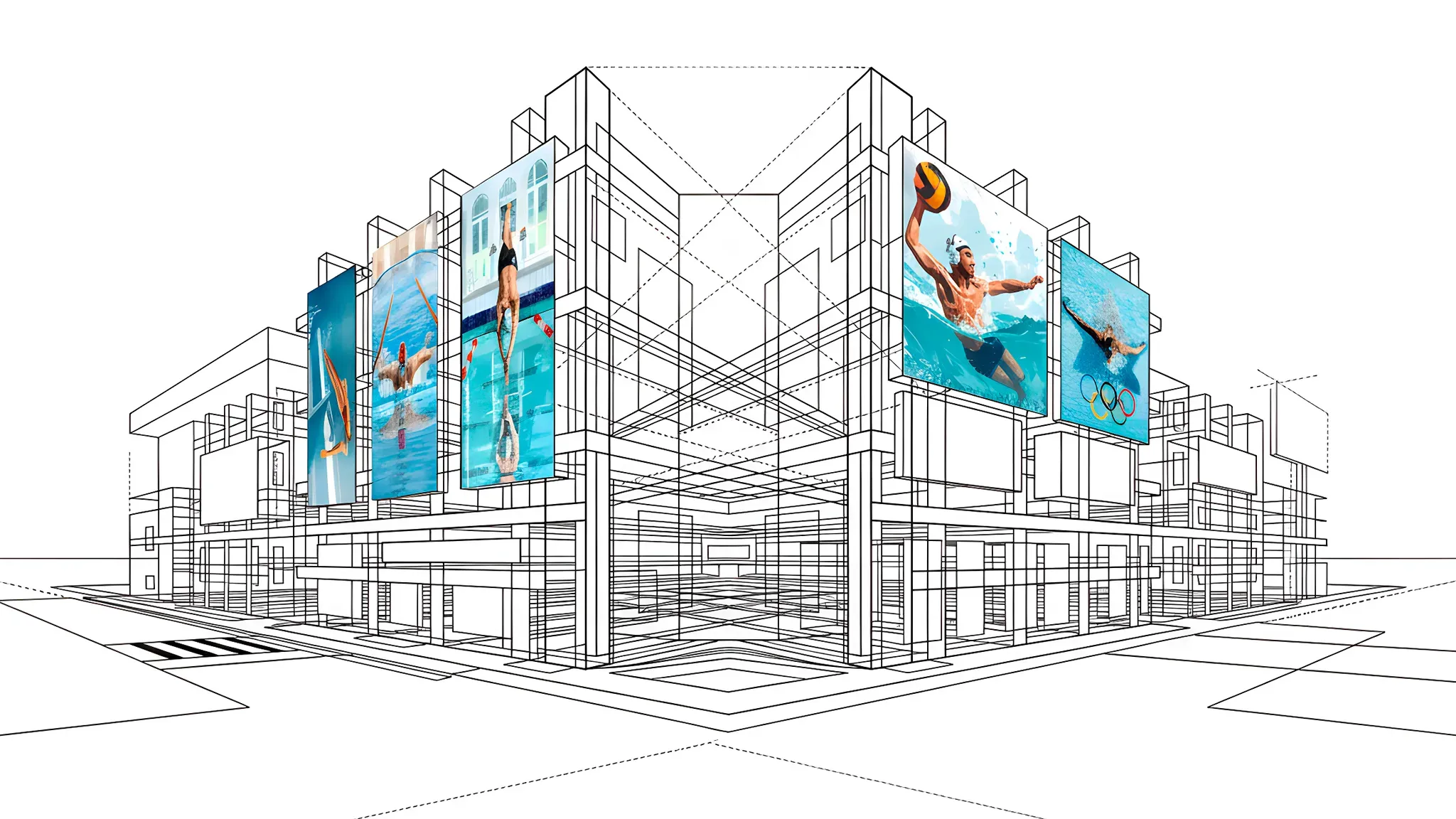
Architecture and structures as a unified system
Architectural and Structural Design of Water Entertainment Complexes
We view the design of water entertainment complexes as a unified engineering process in which architecture, structures, water zones, attractions, and engineering systems are developed simultaneously and in close coordination.
The key objective is not merely to create a visually striking space, but to establish a technically sound, buildable, and economically sustainable foundation for the facility.
At the initial stage, we form the foundation of the future project:
- define the functional and operational model of the complex;
- determine the composition of zones and attractions, design capacity, and usage scenarios;
- develop the functional layout and master plan;
- establish the fundamental spatial, volumetric, and structural concept.
This stage is essential to ensure that all subsequent design decisions evolve within a stable and consistent framework, without revisiting key parameters at later stages.
Design Development (key project stage)
Design Development is the core stage of architectural and structural design for a water entertainment complex. It is at this stage that the project transitions from a concept into a fully buildable engineering system.
Architectural Solutions
At the DD stage, architecture receives its final functional and spatial definition. It ceases to be conceptual and becomes technically precise:
- layouts of all zones and their interconnections are finalized;
- heights, levels, circulation paths, and evacuation routes are fixed;
- envelope systems are developed with consideration for high humidity and condensation;
- glazing details, junctions, and expansion joints are elaborated;
- operational, maintenance, and safety requirements are fully integrated.
Structural Solutions (RC / Steel)
At the Design Development (DD) stage, the structural scope is developed to the maximum level of detail. All structural solutions are verified from the perspective of actual construction and operation:
- selection and calculation of the building’s structural system;
- load calculations for water, occupants, equipment, and attractions;
- detailed design of pool basins, foundations, and floor structures;
- integration of fixing points for water slides, towers, and maintenance platforms;
- resolution of thermal, shrinkage, and movement-related effects;
- development of a corrosion protection strategy and measures for aggressive environments.
Coordination with Engineering and Technology
During the Design Development stage, full interdisciplinary coordination is carried out:
- alignment of structural solutions with water treatment equipment, thermal zones, and attractions;
- reservation of loads, openings, and embedded elements;
- consideration of access, maintenance, and equipment replacement requirements;
- elimination of clashes and inconsistencies between architecture, structures, and engineering systems.
This work is performed within a BIM environment, enabling risks to be identified and resolved before construction begins. The result of the DD stage is a fully coordinated, technically consistent project ready for the production of construction documentation without changes to the approved concept.
Construction Documentation
Construction documentation is the stage at which the project becomes unambiguous and ready for construction.
As part of the construction documentation, we:
- produce detailed drawings for all structural elements;
- thoroughly develop pool basin details, expansion joints, and waterproofing systems;
- define all “wet” interfaces and transitions;
- specify exact requirements for materials and protective coatings;
- prepare specifications, schedules, and technical requirements;
- deliver the project package for review, tendering, and construction.
At Water Engineering, we treat construction documentation as a key construction management tool rather than a formal design stage. High-quality construction documentation eliminates ambiguous interpretation on site, reduces the number of changes and revisions during implementation, and enables contractors to work within clearly defined parameters. As a result, construction documentation directly affects schedule compliance, budget control, and the final quality of the completed facility.
Project documentation timeline
Start at works
3 weeks
6 weeks
9 weeks
12 weeks
Project Framework Definition1 – 2 weeks
step 1The initial stage at which the conceptual and strategic framework of the future water entertainment complex is established. At this stage, we define the functional and operational model, determine the composition of zones and attractions, design capacity, and key usage scenarios, and develop the functional layout, master plan, and principal architectural and structural concepts to avoid revisiting core parameters at later design stages.
Stage DD 4 – 8 weeks
step 2The key stage of our work at which the concept of the water entertainment complex is transformed into a fully buildable engineering solution. During Stage DD, we develop architectural and structural solutions in detail, perform load calculations, and coordinate the project with engineering systems, equipment, and attractions, eliminating technical inconsistencies before construction begins and forming a coordinated project ready for the production of construction documentation without changes to the approved concept.
Construction Documentation6 – 10 weeks
step 3A technical design stage at which architectural and structural solutions are finalized and detailed with direct reference to construction methods and equipment installation. Detailed working drawings, assemblies, and specifications are produced, while levels, tolerances, loads, and material requirements are clarified to ensure unambiguous interpretation of the project, proper assembly of structures, and compliance of design solutions with actual construction and operational conditions.
Timelines may vary depending on project complexity and location.The sequence of design stages determines the technical stability of the entire water entertainment complex. A clearly defined project framework establishes the initial parameters, Design Development (Stage P) verifies and confirms their buildability, while construction documentation (Stage R) translates the approved solutions into an unambiguous format for construction. Disruption of this logic leads to the transfer of design decisions to the construction site, increased risks, and loss of control over schedule and budget.