Concept Development
We develop concepts in which guest experience, architectural and engineering solutions are directly linked to CAPEX, OPEX, occupancy, margins, and investment metrics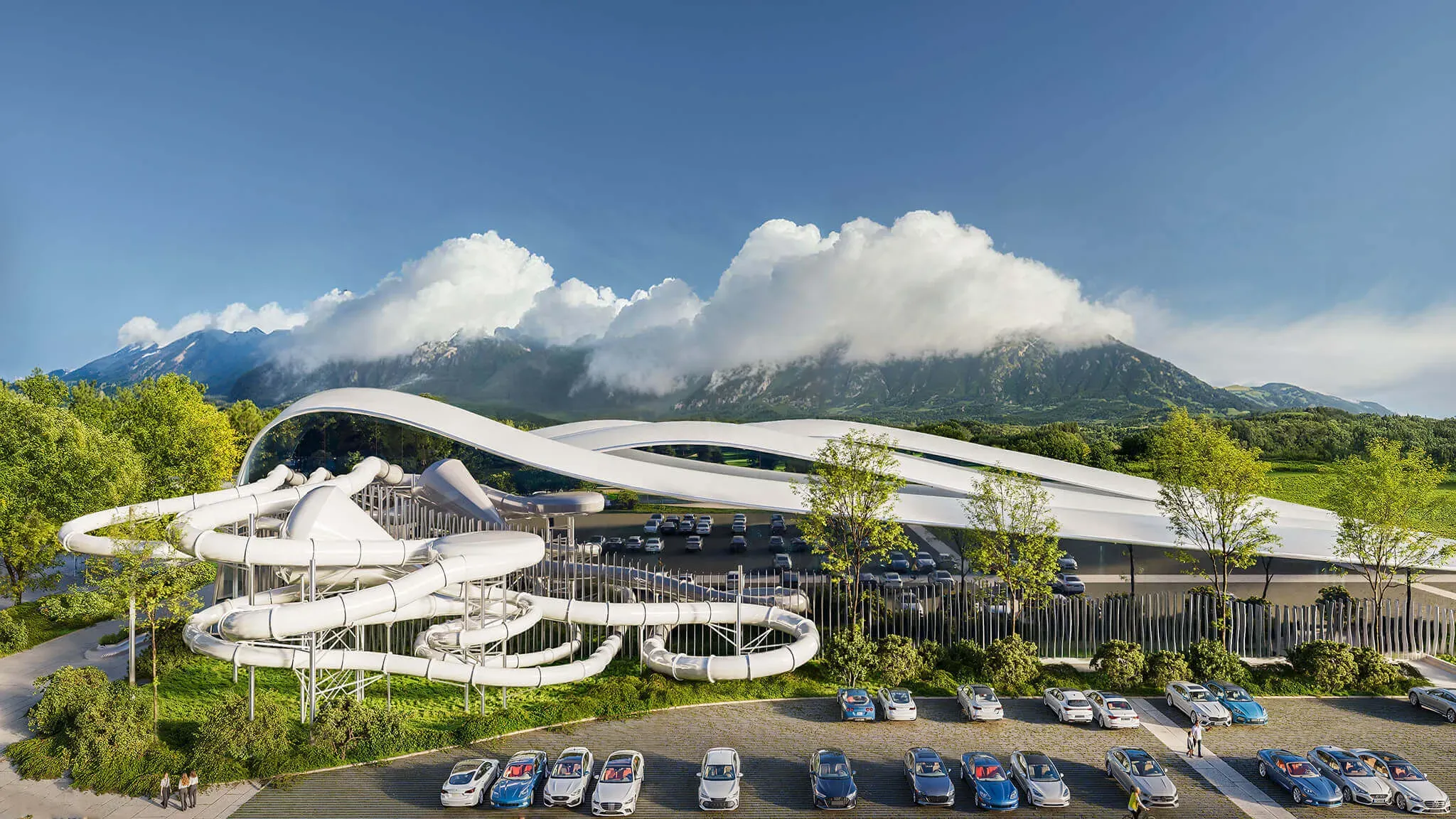
From guest value to a sustainable economic model
Principles of Forming a Successful Concept
Our concept is not just a “beautiful idea,” but an operating system that delivers three core outcomes:
- a high and consistently repeatable level of guest satisfaction;
- a defensible market position;
- a revenue model resilient to seasonality, inflation, and new competitors.
We start with guest value, not with attractions or infrastructure
- Identify key target segments and usage scenarios: families, teenagers, adults, wellness guests, corporate groups, local residents, tourists, hotel guests, etc.
- Define the end-to-end guest journey: arrival and entry → first impression → emotional peak → recovery zones (shade, food, rest) → additional purchases → exit and motivation to return.
- Manage the rhythm of experiences: alternating high-intensity and calm zones increases dwell time and average spend.
Focus on guest experience KPIs
We create differentiation for target audience segments that is structural rather than decorative, resulting in clear competitive positioning based on real guest experience.
We apply multiple layers of protection against concept replication:
- well-developed theming and a “legend” embedded into functional infrastructure elements;
- a signature attraction or unique zone (surfing, rapid river, spa/wellness, indoor/outdoor hybrid);
- full integration with the resort or hotel infrastructure and functionality (logistics, accommodation packages, services, events);
- operational excellence embedded in the layout (separation of flows and functional zones, services combining 2–3 parallel functions, and areas reserved for future expansion).
We build the concept around the revenue structure
As a result, the client receives a revenue model segmented by channels and target groups, supported by a sustainable financial framework.
Key revenue streams include: admission tickets, F&B (the primary profitability driver), spa and wellness, hotel ADR uplift (if applicable), bungalows and VIP zones, retail, training/animation (surfing/swimming), events, and more. The spatial layout and logistics must directly support and enhance these revenue streams.
Capacity, comfort, and flows are key financial parameters
A well-developed concept ensures a controlled guest experience even on peak days by providing:
- a balanced mix of high-throughput and “dwell” zones or attractions;
- efficient queue distribution;
- sufficient seating capacity in F&B areas;
- well-planned locations of locker rooms and restrooms;
- clear visibility of zones for staff and security teams.
Asset resilience: seasonality, operations, renewal
Within the concept, the client receives a lifecycle and phased development strategy that includes:
- sequencing of implementation and modernization phases;
- a replacement and upgrade plan for key elements (infrastructure, attractions, finishes, MEP);
- energy efficiency embedded as part of the concept, not as an afterthought.
Business plan and financial model
This stage is essential to transform the concept from an abstract “vision” into a fully-fledged investment product, structured in terms of CAPEX, OPEX, IRR, DSCR, LTV, Payback Period (PB), WACC, TCO (Total Cost of Ownership), and Lifecycle Costing. It is here that guest experience, architectural and engineering solutions are directly linked to the financial model, operational processes, and investor requirements.
At this level, the concept is tested for financial resilience through stress testing across scenarios of seasonality, demand volatility, cost inflation, energy price increases, changes in ADR, RevPAG (Revenue per Available Guest), ARPU, utilization rate, as well as sensitivity analysis and scenario modeling.
For investors, this format provides a transparent project structure, including:
- CAPEX breakdown (construction, equipment, infrastructure, commissioning);
- OPEX model (staffing, energy, water, chemicals, services, depreciation, maintenance);
- revenue streams;
- debt service model, DSCR, and debt repayment schedule;
- risk assessment (risk matrix) and hedging mechanisms;
- investment metrics (IRR, NPV, PI, PB).
For the client and operator, this is not an abstract strategy but an operational and financial asset management tool that enables forecasting of occupancy/load factor, asset productivity, gross and operating margins, break-even point, scalability, and reinvestment capacity.
The concept development stage is a critically important foundation in the design of water and entertainment facilities, as it is at this level that all key parameters of the future project are defined — from guest experience and competitive positioning to financial sustainability and operational efficiency.
Concept project timeline
Start of works
2 weeks
4 weeks
6 weeks
8 weeks
Target audience and competitive environment analysis1 – 2 weeks
step 1At this stage, the structure of the target audience, its needs, visitation scenarios, and price sensitivity are defined. In parallel, existing and planned competitors are analyzed in terms of facility format, service mix, service level, and market positioning. The outcome of this stage is a clear understanding of real demand, identification of market niches, and the development of a well-founded positioning for the future water and entertainment facility.
Structural program of the facility1 – 2 weeks
step 2At this stage of the concept, the functional and attraction program of the water and entertainment facility is defined, taking into account the target audience, usage scenarios, and the project’s financial objectives. The composition of zones, attractions, and services is developed, along with their interconnections, prioritization, and role in shaping guest experience and revenue generation. The outcome of this stage is a balanced facility program that ensures guest appeal, competitive positioning, and operational efficiency.
Layout planning3-5 weeks
step 3At this stage of the concept, the layout structure of the water and entertainment facility is developed, ensuring logical zoning, effective separation of visitor and staff flows, and operational convenience and safety. The layout solutions integrate attraction programming, service areas, and engineering infrastructure into a unified system, directly influencing guest experience, throughput capacity, and the overall economic efficiency of the facility.
Concept design and architectural solution3 – 4 weeks
step 4At this stage, the visual identity and architectural concept of the water and entertainment facility are developed, reflecting its overall concept, positioning, and target audience. The design defines the style, spatial and volumetric solutions, theming, and key visual accents that ensure recognizability and emotional value for guests. The architectural solution is aligned with functional requirements, engineering constraints, and phased implementation opportunities, forming the foundation for subsequent design stages.
Business plan and financial model2 – 3 weeks
step 5At this stage of the concept, the financial and economic justification of the project is developed, translating the concept into measurable indicators. A business plan and financial model are prepared with detailed CAPEX and OPEX, revenue streams, occupancy forecasts, and cash flow projections. Key investment metrics (IRR, NPV, Payback Period, DSCR) are calculated, along with scenario modeling and sensitivity analysis. The outcome of this stage is a bankable model that enables investors and operators to assess the resilience, risks, and long-term profitability of the water and entertainment facility.
Timelines may vary depending on project complexity and location.Each step — from target audience and competitive analysis to architectural and financial decisions — establishes the framework and constraints for subsequent actions. Skipping or prematurely detailing individual stages leads to concept distortion, redesigns, loss of functionality, and reduced investment efficiency. A sequential approach ensures alignment between guest experience, layout solutions, and the financial model, enabling the creation of a resilient, scalable, and economically sound facility.